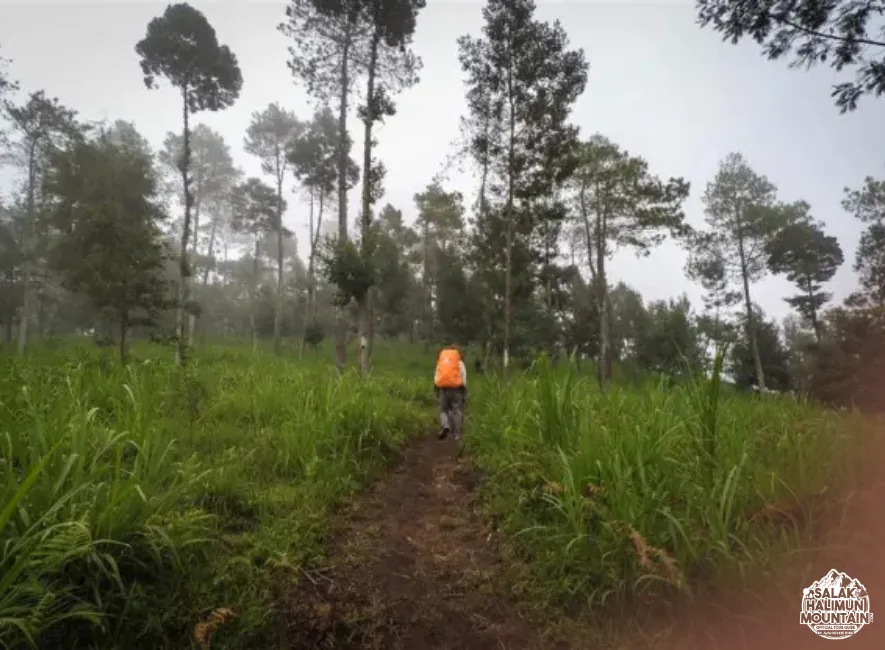
salakhalimun.com – The first steps into the rainforest often feel heavier than expected. The air is thick with moisture, the ground soft beneath your boots, and every breath carries the scent of wet earth, decaying leaves, and moss-covered stones. As you walk deeper into Mount Salak Halimun, your body quietly begins a remarkable process of adjustment. Muscles wake up, breathing shifts, balance sharpens, and the mind slowly untangles itself from the noise of modern life. This is not just walking. This is adaptation.
The Rainforest as a Living Training Ground
Walking in nature is fundamentally different from walking on pavement or treadmills. In Halimun Salak National Park, every trail tells your body to pay attention. Roots twist across the path like ancient veins. Rocks are slick with algae. Mud yields softly underfoot. The dense canopy filters sunlight into shifting patterns that change by the minute.
Your body responds instinctively. Small stabilizing muscles in your ankles, knees, and hips activate to keep you upright. Your core tightens subtly with each uneven step. This constant micro-adjustment trains balance and coordination far more effectively than flat surfaces ever could.
In the rainforest, walking becomes a full-body conversation with the land.
Breathing Changes in Forest Air
One of the first adaptations many people notice is their breathing. At the trailhead, breaths may feel shallow. The humidity wraps around your chest, and the uphill sections demand more oxygen than expected.
After twenty or thirty minutes, something shifts. Your breathing deepens. The rhythm becomes slower and more intentional. Surrounded by towering trees and flowing streams, your nervous system begins to relax. Studies have shown that forest environments encourage deeper, more efficient breathing patterns, and here in Salak Halimun, you can feel it happen in real time.
The air itself feels alive. Cool drafts rise from shaded ravines. Mist drifts between tree trunks. Each breath carries the subtle freshness of leaves and rain, encouraging your lungs to open fully.
Muscles Learn Endurance, Not Force
Rainforest trekking does not reward speed. It rewards consistency.
As you walk longer distances along Salak Halimun trails, your muscles adapt by improving endurance rather than explosive strength. Calves learn to handle long ascents. Quadriceps absorb the steady strain of descents. Smaller muscles around joints strengthen to protect against slips and sudden shifts.
This kind of adaptation is gentle but profound. Instead of fatigue arriving suddenly, it fades into a steady, manageable effort. Your body learns how to distribute energy efficiently, conserving strength for hours of movement rather than minutes.
The Nervous System Slows Down
Perhaps the most powerful adaptation happens quietly in your nervous system.
Urban life trains the body to stay alert, tense, and reactive. Traffic noise, notifications, schedules, and deadlines keep the nervous system in a constant state of readiness. When you walk through the rainforest, that constant alertness is no longer necessary.
The rhythmic sound of footsteps on soil, cicadas humming in the background, and rivers rushing below gently signal safety. Heart rate variability improves. Stress hormones decrease. The body shifts from fight-or-flight into rest-and-digest mode.
This is why many trekkers describe feeling calmer, clearer, and emotionally lighter after a walk in nature. It is not imagination. It is adaptation.
Balance and Spatial Awareness Sharpen
Rainforest trails demand awareness. You must watch where you place your feet while also scanning ahead for branches, slopes, and changes in terrain.
Over time, your proprioception improves. This is your body’s ability to sense its position in space. You begin to move more confidently across narrow paths and uneven ground. Steps become smoother. Hesitation fades.
This adaptation carries back into daily life. Many visitors report feeling more stable and coordinated even weeks after returning home.
The Role of Sensory Input
In Salak Halimun, the senses are constantly engaged.
You hear layers of sound: insects buzzing, birds calling, leaves rustling, distant thunder rolling over ridges. You smell damp bark, wild ginger, and fresh rain. You feel cool air on your skin when clouds pass overhead, then warmth when sunlight breaks through.
This rich sensory input stimulates areas of the brain that often go underused in artificial environments. Your brain adapts by becoming more attentive and present. Distractions fade. Thoughts slow.
Walking in nature becomes a form of moving meditation.
Foot Strength and Natural Gait
Modern footwear and flat surfaces can weaken the natural mechanics of walking. In contrast, rainforest trails encourage a more natural gait.
Your feet grip the ground, adjusting to slopes and textures. Arches engage. Toes spread slightly for balance. Over time, foot muscles strengthen, reducing strain on knees and lower back.
This adaptation is one reason why experienced trekkers often move with quiet confidence through forest terrain.
Energy Regulation Over Long Walks
Unlike short bursts of exercise, long walks in nature teach the body how to regulate energy efficiently.
You learn when to slow down, when to pause, and when to push gently forward. Hunger cues become clearer. Thirst is easier to recognize. The body adapts by using fuel more steadily, avoiding sharp spikes and crashes.
This is especially noticeable on full-day treks in Mount Salak Halimun, where patience and pacing matter more than strength.
Mental Clarity and Emotional Balance
As the body adapts physically, the mind follows.
Walking among ancient trees and misty valleys offers perspective. Problems that once felt urgent soften. Thoughts become less tangled. Many people find creative ideas emerging naturally during long walks.
This mental clarity is closely linked to physical movement in natural environments. The body and mind adapt together, reinforcing each other.
Immune System and Long-Term Health
Regular exposure to forest environments has been associated with improved immune function. Natural compounds released by trees, combined with reduced stress and gentle physical activity, support overall health.
While walking in Salak Halimun may feel simple, its effects accumulate over time. The body adapts not just for the trail, but for resilience in daily life.
Respecting the Process of Adaptation
Adaptation takes time. This is why responsible trekking is essential.
Rushing through trails, ignoring fatigue, or pushing beyond limits can disrupt the body’s natural adjustment. In Salak Halimun, walking slowly allows both you and the forest to exist in balance.
Listening to your body, respecting trail conditions, and minimizing impact on the environment are all part of ethical trekking.
Walking as a Relationship with the Forest
Over repeated visits, something deeper happens. The body begins to recognize the forest. Muscles remember the feel of mud and stone. Breathing adjusts more quickly. Calm arrives sooner.
This is not coincidence. It is relationship.
The rainforest of Mount Salak Halimun does not demand conquest. It invites adaptation. Each step is a quiet agreement between human and landscape.
And in that agreement, both are changed.
So, if you’re ready to explore the wonders of Mount Salak Halimun, head over to our ONLINE BOOKING PAGE and let’s start planning your adventure.
Or simply CLICK THIS LINK to chat with us on WhatsApp.
With our team, you’re not just getting a guide; you’re gaining a local friend who will ensure your trip is nothing short of extraordinary.